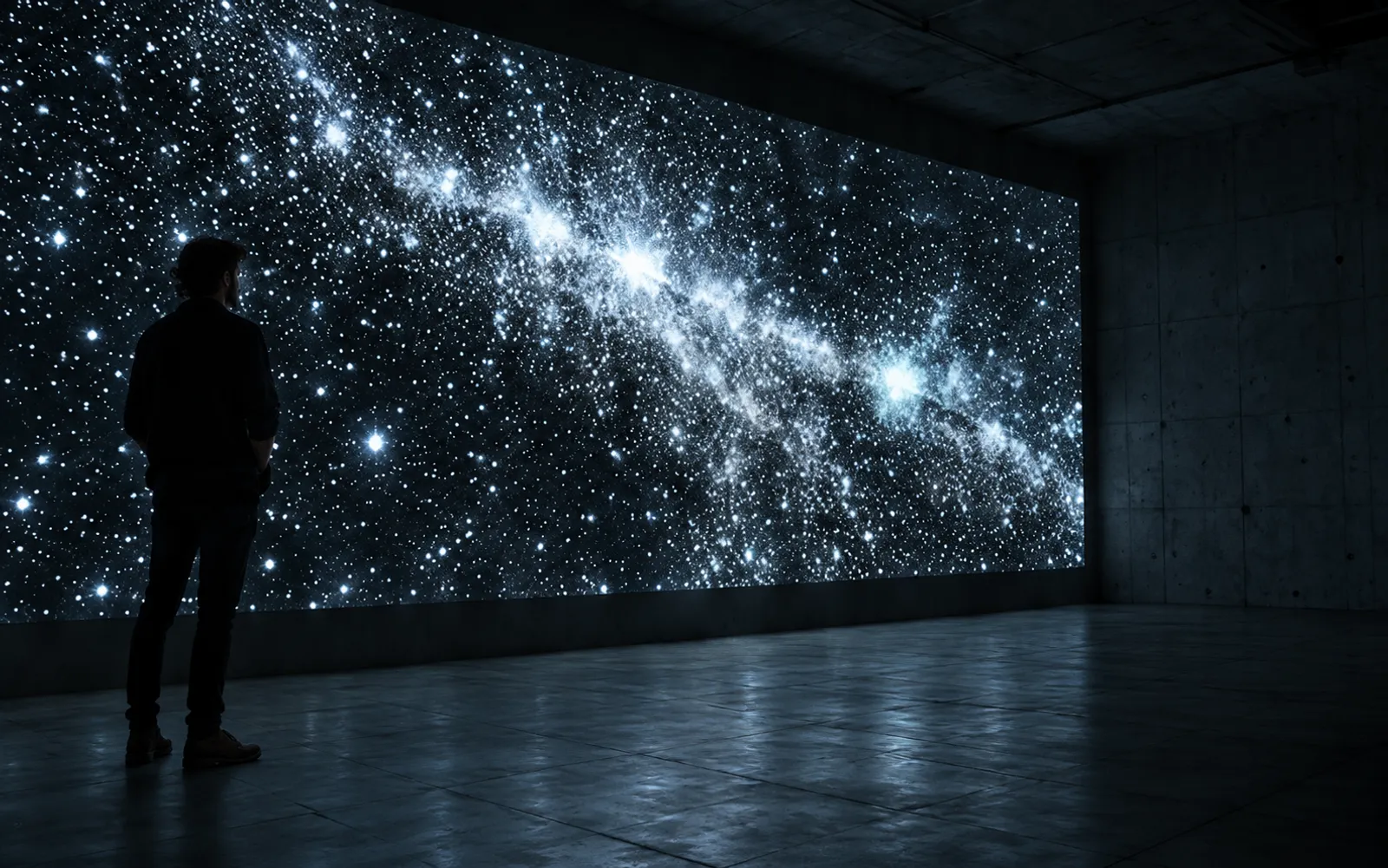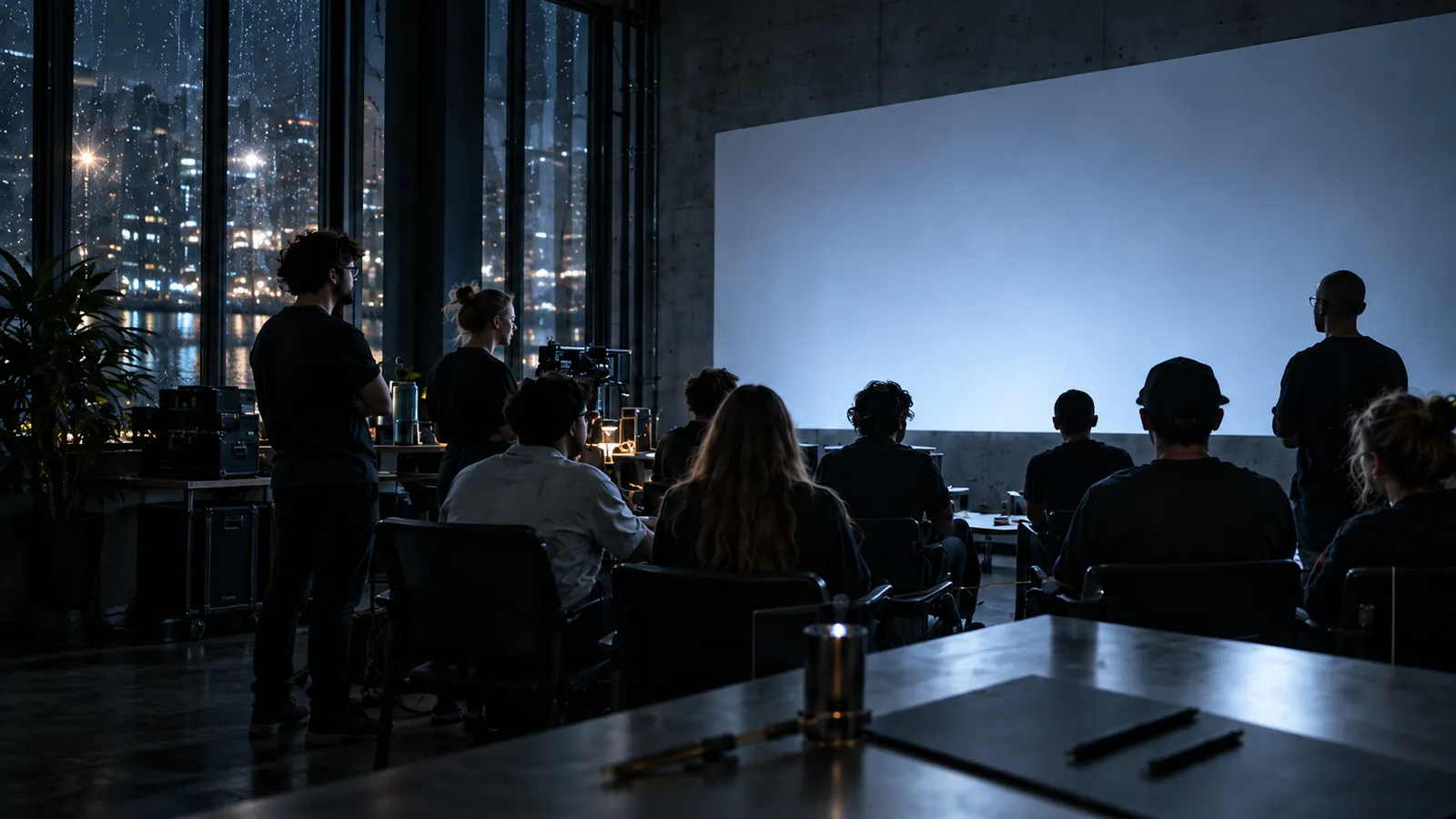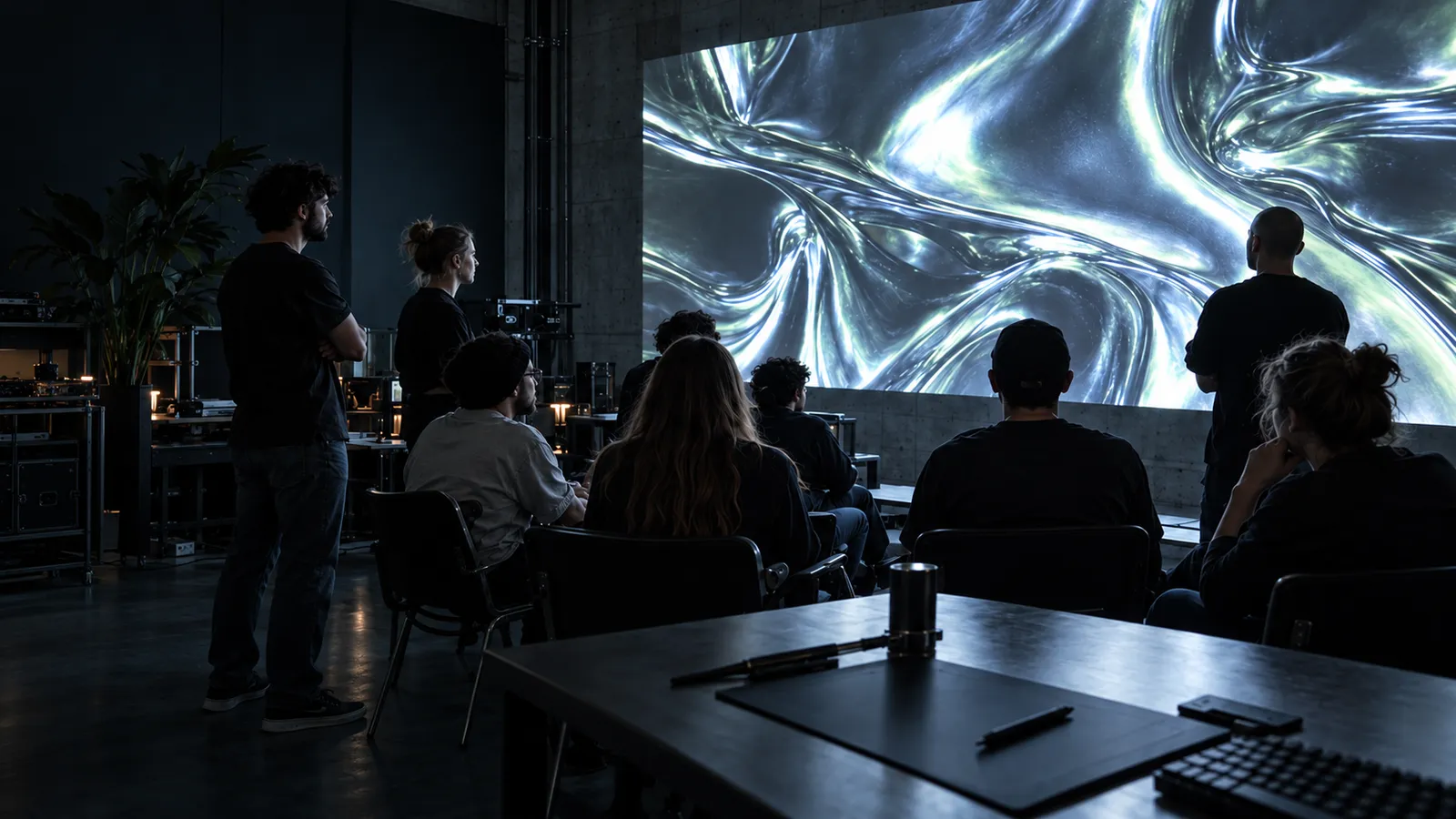
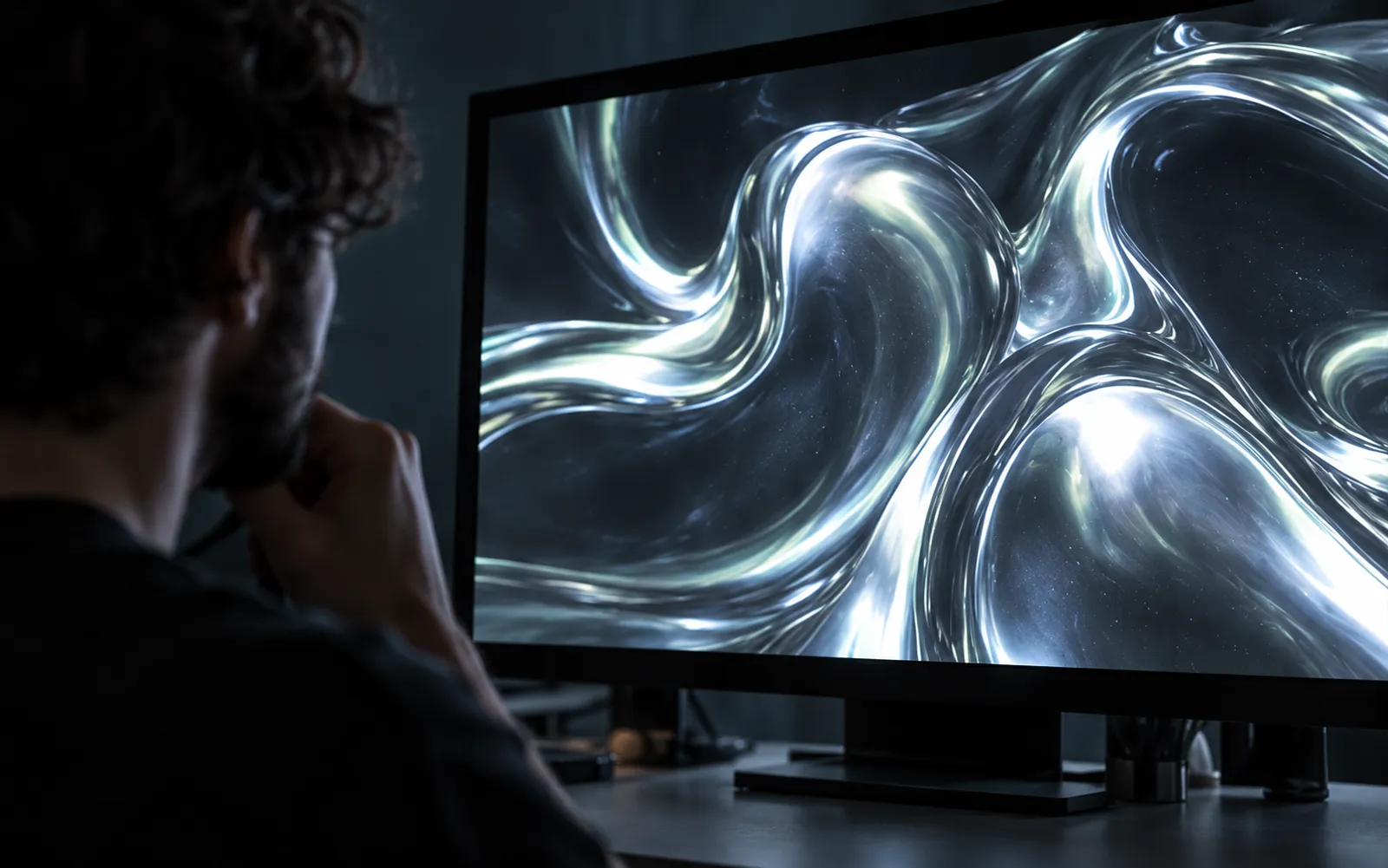
A team in a dark concrete screening room, seen from behind, watching a huge projection of liquid silver light, a pen tablet and keyboard on the table in front
Scene 01 / Rotterdam / Motion + interactive

We build the parts people remember.

Ferrous is a nine-person motion and interactive design studio. One room in Rotterdam, from the first frame to the final build.
About six projects a year
Design + build, in one room
02 / The whole thing

Not a handover. Not a layer. The thing itself.

We direct it, design it and ship it. Motion, interface and build develop together from week two, against a weight agreed before the first effect.
In the room
Direction · Interaction · Engineering · Performance
Handover
None — we ship what we design
Subcontracting
None — the build is ours

No gap between the picture and the product.

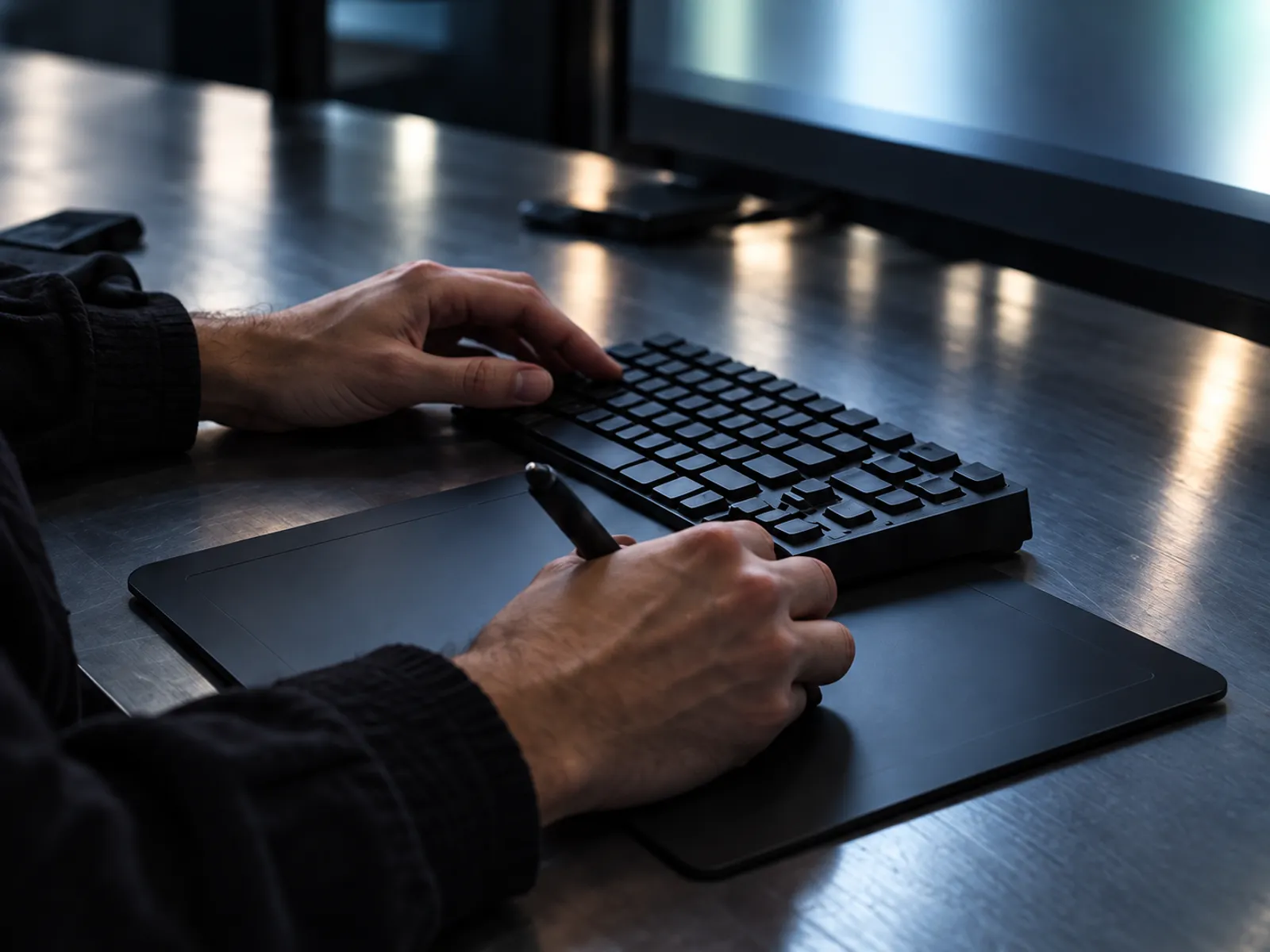
Hands moving between a black pen tablet and a compact keyboard on a dark steel desk
03 / Selected work

Three builds. Every one measured.

We take on about six projects a year, so this is most of the last two. Each one leaves with a record of what shipped and what it weighed.
Aurora Labs — 2026
Brand · WebGL · Build

A site that renders its own product

The hero is a live scene from Aurora's own rendering engine instead of a stack of screenshots — and its still first frame is already the design.
Talk to us about yours ↗
  • 340 KB total JavaScript, hero included
  • 1.4 s to interactive on a mid-range phone on 4G
  • A static first frame for no WebGL and reduced motion
  • 41 display glyphs · 14 KB
  • 0 video files
Linnet Type Foundry — 2025
Product · Interaction · Type

A specimen you can break

Every setting is live, every glyph is editable in place, and the licence price changes with seats and axes as you change your mind.
Talk to us about yours ↗
  • 1 variable font, 96 KB
  • The work of 11 static cuts
  • Every axis control is a real input
  • The whole specimen works from the keyboard
Sable Point Observatory — 2025
Editorial · Data · Motion

Forty years of sky, in one scroll

An observatory's public archive rebuilt as one continuous passage through four decades of observations, without losing the search or a single old address.
Talk to us about yours ↗
  • 92,000 records, all reachable
  • Canvas at 60 fps
  • 4,000 points on screen
  • The original search, kept
  • Every legacy URL still resolves
04 / What we do

The memorable parts, and the build beneath them.

Four things, done end to end. One room, one rate, one accountable team.
01

Real-time graphics

Shaders, canvas and scroll-driven motion, written by hand and budgeted in kilobytes.
02

Brand systems for screens

Type that scales, colour that survives dark mode, and motion treated as part of the identity.
03

Product interfaces

The screens after the marketing site — dashboards, editors and configurators people use every day.
04

Design + build

We ship what we design. No handover document, because there is no handover, and no subcontracting.
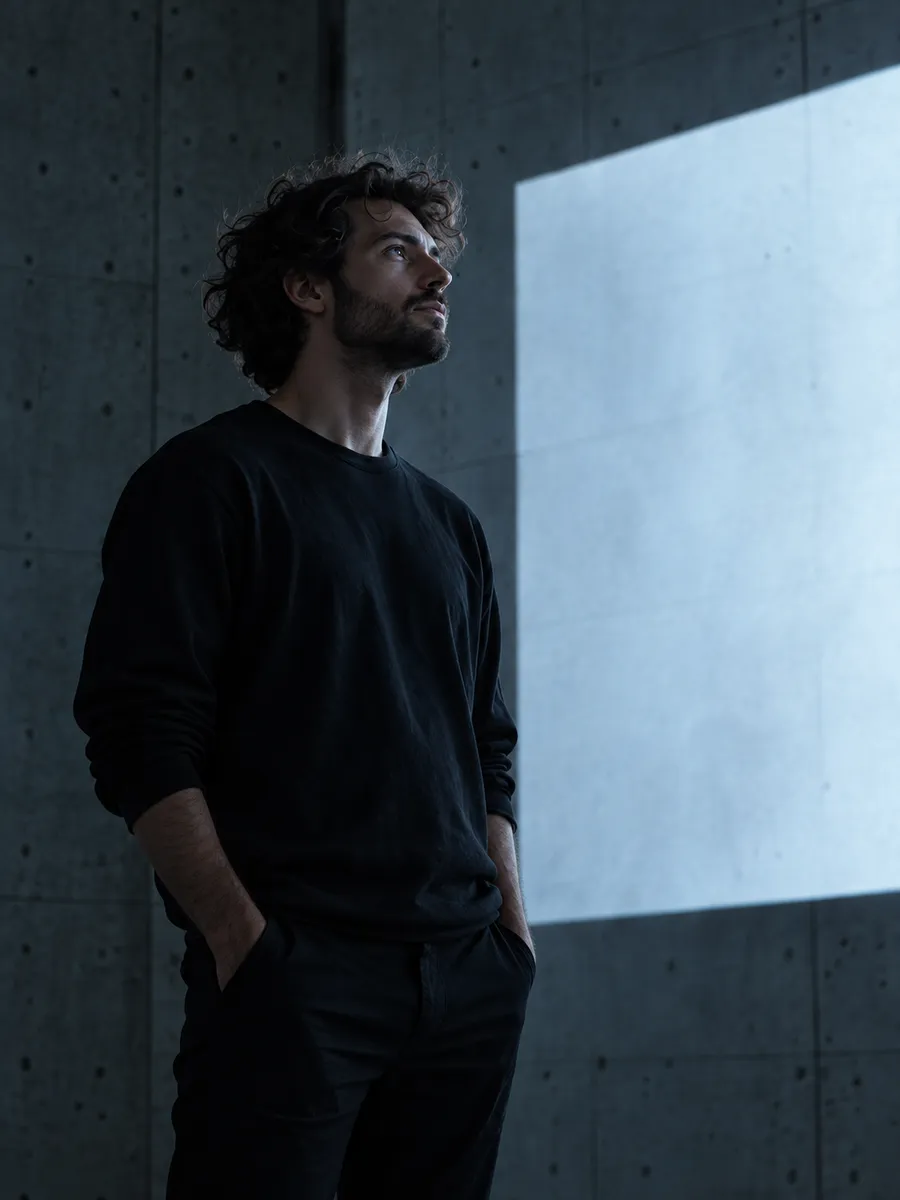
A man in a black sweater standing in front of a pale projection on a concrete wall, looking up into the light
05 / Positions, held in public

The rules we bring into the room.

They rule work out as often as they win it, which is the point of having them.

An effect that cannot survive a CMS is a decoration

Colours, copy and section counts stay parameterised and editable by the people who run the site.

The fallbacks are the work

No WebGL. Reduced motion. A hidden tab. A first paint that looks finished before anything runs.

Weight is a design decision

It belongs in the first conversation, not in a report three weeks after launch.

If a photograph would say more, use the photograph

We have talked clients out of the effect they came for, and the sites were better for it.
06 / The weight of the work

Every project leaves with a receipt.

We publish what shipped and what it weighed. Not a score — a design record, conditions and fallbacks included.
340 KB
Aurora Labs · JavaScript, hero included
1.4 s
Aurora Labs · to interactive on 4G
96 KB
Linnet Type · one variable font
11
Linnet Type · static cuts it replaced
92,000
Sable Point · records, all reachable
4,000
Sable Point · points on screen at 60 fps
07 / How a project runs

Twelve to sixteen weeks. Four acts.

The shape is always this; the lengths move around it. You see the work running while there is still time to change it.
  1. Act I — Discovery · 1 week

    Paid, at cost. What you have, what it weighs and what is actually wrong. You keep the output whether or not we continue.

  2. Act II — Direction · 3 weeks

    Two directions, prototyped in the browser rather than drawn. No third option to pad a deck.

  3. Act III — Design + build · 6–10 weeks

    In parallel from week two, against the performance budget set in discovery. Deployed for you to see every Thursday.

  4. Act IV — Launch + after · 2 weeks

    We ship and stay for a fortnight, then return for a paid check-in at three months.

08 / People

Nine people. One room.

The people making the decisions are the people making the work. These are the four you would talk to every week.
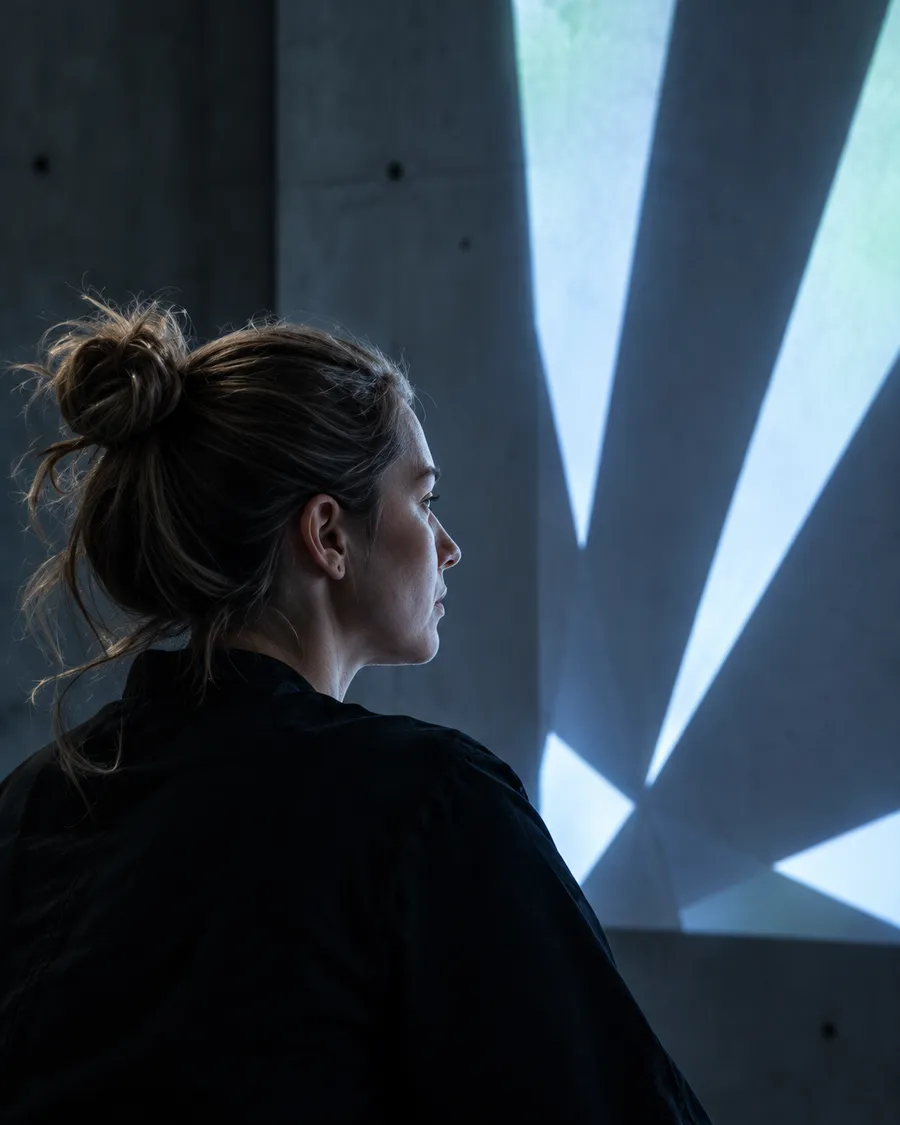
Maud Verhoeven, hair tied up, watching a projection of sharp white shards of light
Maud Verhoeven
Founder · design
Fourteen years in the trade. Art directs everything and still sets type herself.
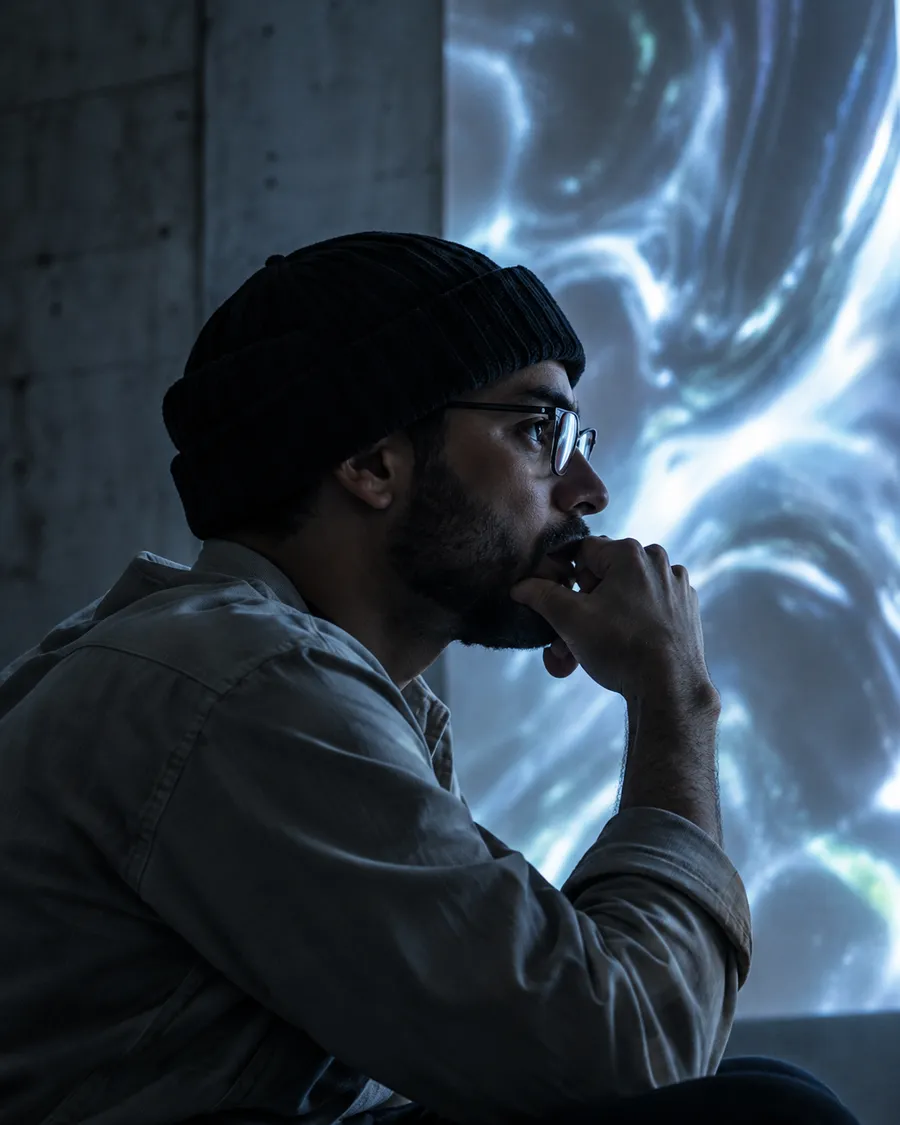
Ilias Demir in glasses and a black beanie, chin on his hand, studying a projection of liquid light
Ilias Demir
Founder · engineering
Writes the shaders, and can tell you the weight of an idea before you finish describing it.
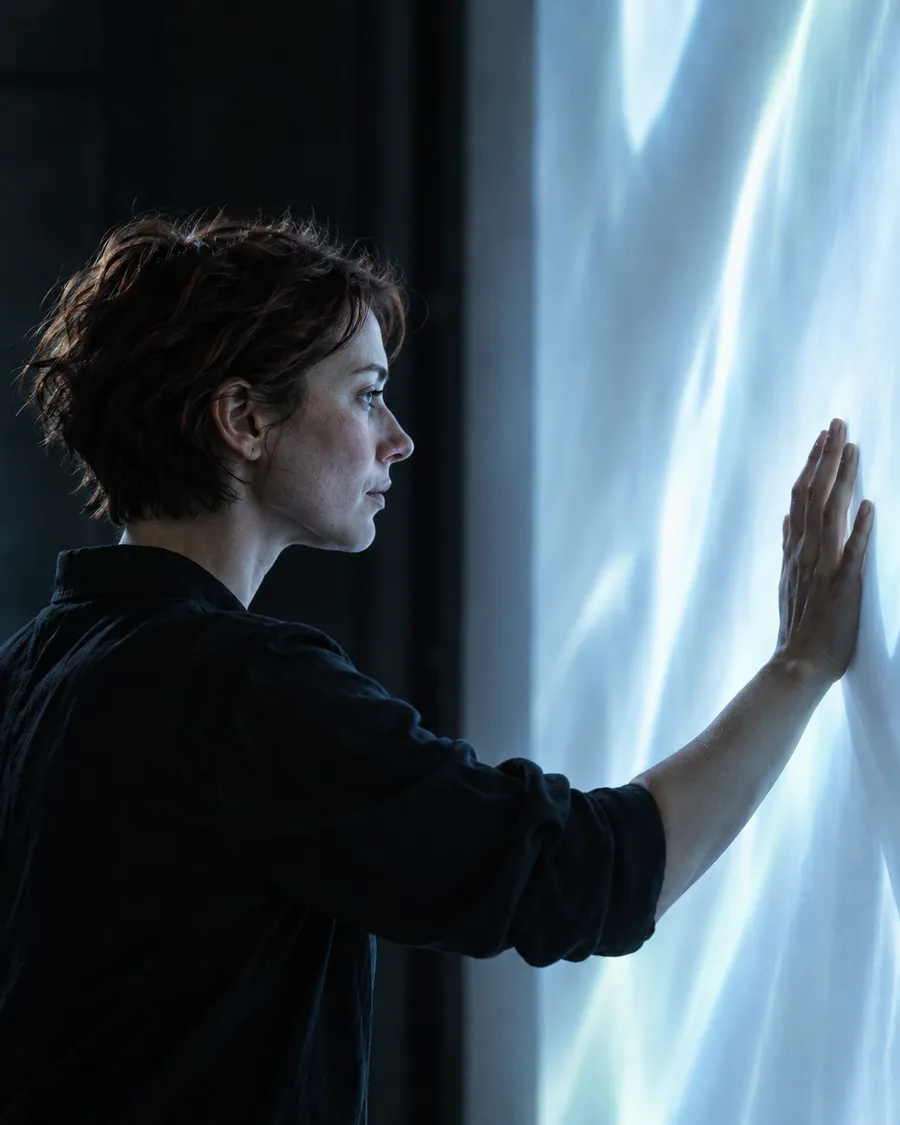
Saoirse Behan with short auburn hair, her palm against a glowing pale-blue projection
Saoirse Behan
Interaction design
Joined in 2021 from a product team, which is why the prototypes are real, not decks.
Kwame Osei typing at a keyboard under cool monitor light in a dark studio
Kwame Osei
Engineering
Owns the build and the performance budget — the reason every project carries its numbers.
09 / Heard in the room

What they said when we were not in the call.

  • A hand sketching with a black pen in an open notebook beside a keyboard
    Dr. Lena Kovač, CEO, Aurora Labs
    They talked us out of the thing we hired them for in the second meeting, and were right.
  • An empty chair facing a wide projection of liquid light in a dark room
    Tomás Reyes, Head of Digital, Linnet Type
    The only studio I have worked with that brought a performance budget to the kickoff rather than to the retro.
  • Four people in silhouette talking at a table in front of a projection of liquid light
    Ruth Ellery, Director, Sable Point Observatory
    Nine people, and four of them were in every conversation.
10 / The terms

One rate. Said plainly.

We will tell you which end of the range in the first call. Discovery is one paid week at cost, and its output is yours whether or not we continue.
One rate for everyone
€1,350 a day
A typical project
€55,000–€120,000
Discovery
One week, paid at cost
A project
Twelve to sixteen weeks

About six projects a year. We say no about half the time, and we say it quickly.

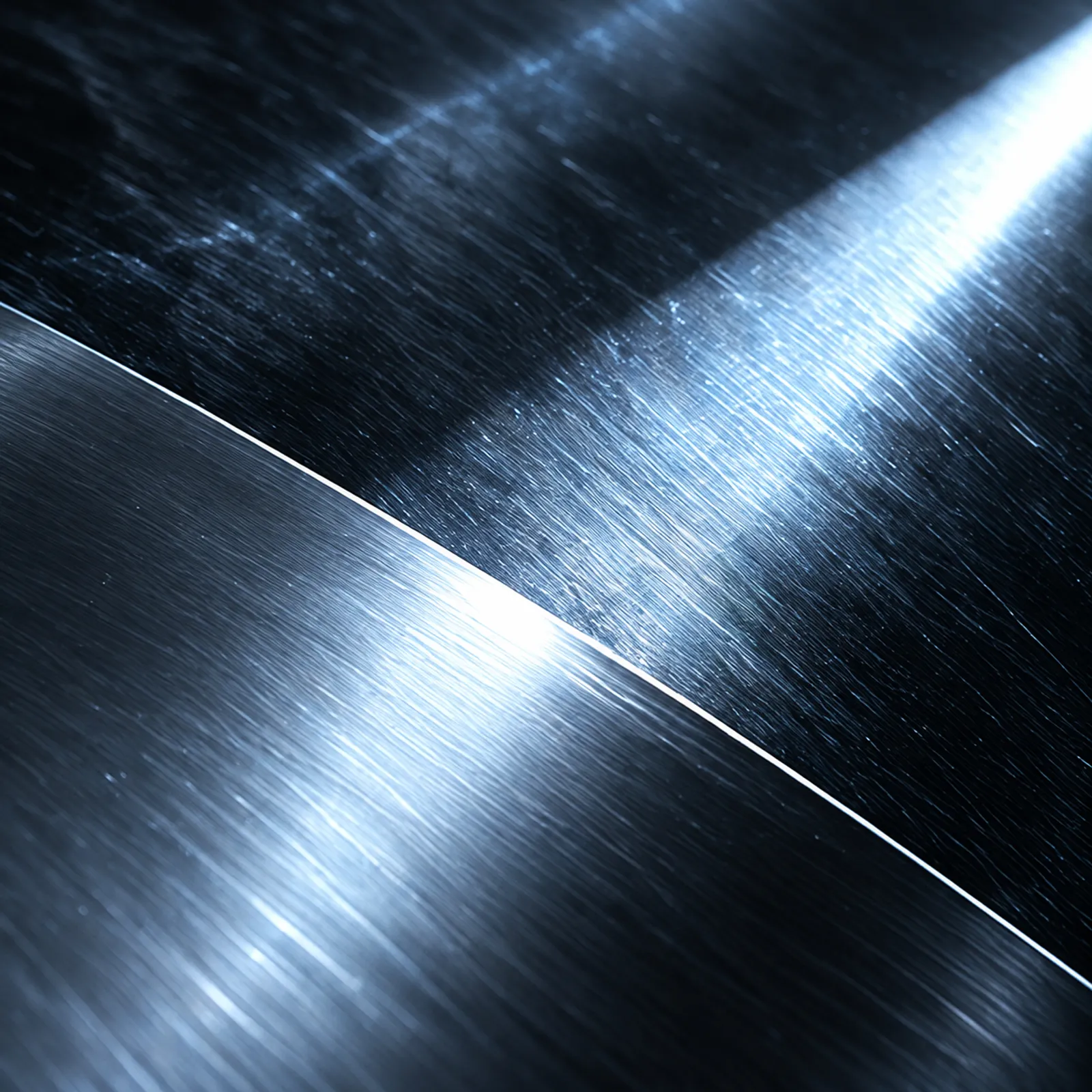
Brushed steel catching a narrow blue-white beam of light along a curved edge
11 / Questions

Before the call.

Yes. The build is part of the design from week two, and we ship it ourselves. There is no handover, and we do not subcontract it.
12 / Enquiry

Put it on the table.

Tell us what you are making, changing or trying to understand. A paragraph is plenty: what it is, roughly when, and roughly what you can spend.
Write
hello@ferrous.exampleOne of the founders reads every message.
The studio
Rotterdam, NetherlandsNine people, one room.
Working here
Say helloRarely, and never through a recruiter. Write with something you have made.
Or fill out the form

13 / End frame

Make the firstframe hold.

Then make everything after it earn its weight.